
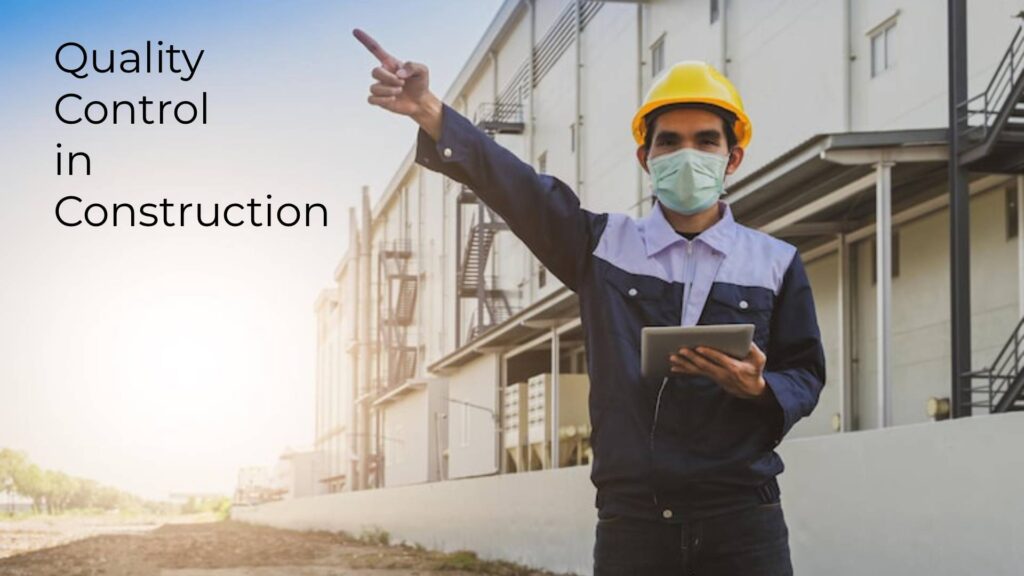
Building a home is one of the most significant financial decisions you will ever make. In India, where the residential construction sector is projected to touch $1.39 trillion by 2033, thousands of families invest their life savings into constructing a house, only to discover cracks in the walls, seeping roofs, or crumbling plaster within the first few years. The root cause? Inadequate quality control in construction.
Whether you are building a house in Bangalore, Pune, Hyderabad, or Chennai, understanding quality control is no longer optional. It is the single biggest factor that determines whether your home stands strong for decades, or becomes a financial nightmare.
In this guide, we break down everything about quality control in construction, what it means, why it matters, how it works, and what you must demand from your construction company.
What Is Quality Control in Construction?
Quality control (QC) in construction refers to the systematic process of monitoring, inspecting, and verifying every phase of a construction project to ensure it meets pre-defined standards, codes, and client expectations. It is not a one-time inspection at the end, it is an ongoing, stage-by-stage discipline embedded throughout the entire project lifecycle.
Quality control covers:
- Raw material testing and procurement standards
- Workmanship standards at every construction stage
- Compliance with Bureau of Indian Standards (BIS) and IS codes
- Structural integrity and load-bearing verifications
- Waterproofing, electrical, and plumbing quality checks
- Final finishing and handover inspections
Quality Control vs. Quality Assurance, What Is the Difference?
Many homeowners confuse the two terms. Here is a simple way to think about it:
Quality Assurance (QA) is the process, the policies, plans, and standards established before construction begins to ensure quality is achievable.
Quality Control (QC) is the action, the physical inspections, tests, and verifications carried out during and after construction to confirm those standards are actually being met.
In practice, a reliable construction company like CosmicNest integrates both QA and QC into their workflow from day one, ensuring every project phase is governed by documented standards and verified through regular site inspections.
Why Quality Control in Construction Is Critical in India
India’s construction industry faces some unique challenges that make quality control even more important than in many other countries:
1. Unregulated Material Supply: In many Indian cities, substandard cement, steel, and sand are sold alongside premium-grade materials. Without testing, it is nearly impossible to tell the difference just by looking at them.
2. Unskilled or Semi-Skilled Labour: A significant portion of India’s construction workforce lacks formal training. Without proper supervision and clear quality benchmarks, errors in concrete mixing, reinforcement placement, and waterproofing are common.
3. Cost-Cutting Practices: Competitive pricing pressures often lead some contractors to dilute cement ratios, use thinner steel bars, or skip crucial curing stages, all of which compromise structural integrity.
4. Climate-Specific Challenges: Indian weather conditions, heavy monsoon rains, intense heat, humidity, demand specific construction practices. Poor waterproofing in Bangalore’s rainy season, for instance, can lead to significant structural damage within just 2–3 years.
5. Lack of Client Awareness: Most homeowners in India do not know what questions to ask about quality. They trust contractors blindly, often realising problems only after possession.
When you partner with a residential construction company in Bangalore that has a structured QC process, these risks are systematically eliminated.
The 7 Key Stages of Quality Control in Residential Construction
Quality control is not a single checkpoint, it runs parallel to every stage of your home’s construction. Here is what a comprehensive QC framework looks like:
Stage 1: Pre-Construction Planning and Material Approval
Quality begins before a single brick is laid. At this stage:
- Soil testing is conducted to determine bearing capacity and choose the right foundation type
- Structural design is reviewed by a certified structural engineer
- Material specifications are locked in, grade of cement (OPC 53 or PPC), TMT steel grade (Fe500D), brick type, and aggregate size
- IS Code compliance is reviewed for the specific project type
A proper construction estimation service also includes material quality planning, ensuring that the budget is allocated for the right-grade materials and not compromised later.
Stage 2: Foundation and Substructure QC
The foundation is the most critical part of any structure. Quality checks at this stage include:
- Verification of excavation depth and dimensions as per approved drawings
- PCC (Plain Cement Concrete) mix ratio testing, typically 1:4:8 for mass concrete
- Checking placement and cover of reinforcement steel in footings
- Slump test for concrete workability
- Core cutting and compressive strength tests on sample concrete cubes
- Verification of anti-termite treatment application
Errors at the foundation stage are extremely expensive to correct and in many cases structurally irreversible. This is why experienced builders like CosmicNest conduct multiple inspection rounds before proceeding to the superstructure.
Stage 3: Superstructure and Concrete Work QC
Once columns, beams, and slabs begin, the quality checks intensify:
- Column alignment and plumb checks using spirit levels and plumb bobs
- Formwork and shuttering inspection for adequate support and dimensions
- Concrete mix design verification, M20, M25, or M30 grade as per structural requirements
- Reinforcement placement checks, bar diameter, spacing, and adequate cover
- Concrete cube testing for 28-day compressive strength
- Proper curing, a minimum of 14–21 days for slabs and columns
A common mistake on many Indian sites is inadequate concrete curing due to time pressure. This alone can reduce concrete strength by 20–30%, making your home structurally vulnerable.
Stage 4: Brickwork and Masonry QC
Wall construction quality directly affects thermal comfort, sound insulation, and long-term durability:
- Checking brick quality, water absorption, compressive strength (IS 3495)
- Mortar mix ratio verification (usually 1:6 for internal walls, 1:4 for external)
- Plumb and level checks for every wall course
- Inspection of lintel placement above door and window openings
- Checking for raking joints before plastering to ensure plaster adhesion
Stage 5: Waterproofing and Services QC
In Bangalore and other high-rainfall zones of India, waterproofing quality determines the long-term livability of a home:
- Terrace waterproofing, checking the system type (crystalline, membrane, or cementitious), slope, and overlap
- Bathroom and wet area waterproofing, flood test for 24–48 hours before tiling
- Plumbing leak tests before concealment, pressure test at 1.5 times working pressure
- Electrical rough-in inspection, checking conduit routing, earthing, and cable quality before wall plastering
Many homeowners face leakage issues within 2–3 years because waterproofing was either skipped or done incorrectly. For homes built by CosmicNest, waterproofing quality is one of the most rigorously checked stages, backed by the company’s residential project maintenance service that provides post-handover support.
Stage 6: Finishing Work QC
Finishing stages determine the visual and functional quality of your home:
- Plastering thickness and flatness checks, typically 12–15mm for internal walls
- Flooring tile checks, lippage testing, grout consistency, and hollow tile detection
- Paint quality, primer coverage, number of coats, and surface finish uniformity
- Door and window frame alignment, checking for squareness and smooth operation
- False ceiling and carpentry quality checks for alignment and finish
Poor finishing quality is the most common complaint among Indian homeowners. Tiles popping off, uneven plaster, paint peeling within a year, these are all signs of compromised QC during the finishing stage.
Stage 7: Pre-Handover Inspection and Snag List
Before keys are handed over, a thorough walkthrough is conducted:
- Creation of a snag list, documenting every pending item, defect, or rework needed
- Electrical switchboard testing, water pressure checks, and door functionality
- Final structural visual inspection
- Review of all as-built drawings and compliance certificates
At CosmicNest, clients are given a transparent final inspection report before handover, and all snag items are resolved before possession. This is part of their commitment to the 1-year warranty on construction work and 5-year structural warranty offered with every project.
Key Materials That Must Be Tested on a Construction Site
Here is a quick reference for homeowners on the materials that should undergo mandatory testing:
| Material | Test | Standard |
| Cement | Consistency, setting time, compressive strength | IS 269 / IS 8112 |
| Steel (TMT) | Tensile strength, yield strength, bend test | IS 1786 |
| Concrete | Slump test, cube compressive strength | IS 456 |
| Bricks | Water absorption, compressive strength | IS 3495 |
| Sand | Silt content (should be <8%), gradation | IS 383 |
| Water | pH, chloride content, total dissolved solids | IS 456 |
Insisting on material testing reports is your right as a homeowner. Any reputable residential construction company in Bangalore should be willing to share these reports transparently.
IS Codes Every Indian Homeowner Should Know
India has a well-developed set of construction standards set by the Bureau of Indian Standards (BIS). These IS codes are the backbone of quality control in Indian construction:
- IS 456:2000, Plain and Reinforced Concrete (the most fundamental code for any RCC construction)
- IS 13920:2016, Ductile detailing for earthquake resistance
- IS 1893, Criteria for earthquake-resistant design
- IS 875, Code of practice for structural safety of buildings
- IS 2212, Code of practice for brickwork
- IS 3414, Design of joints in buildings
Bangalore falls in Seismic Zone II, and all residential construction must comply with relevant IS codes for seismic safety. Many builders skip these specifications to cut costs, a dangerous practice that CosmicNest firmly avoids.
Common Quality Defects in Indian Residential Construction (And How to Avoid Them)
Understanding what can go wrong helps you ask the right questions:
1. Honeycombing in Concrete: Caused by poor concrete consolidation. Check for smooth column and beam surfaces after formwork removal.
2. Seepage and Leakage: Usually due to inadequate waterproofing or poor joint sealing. Insist on flood tests and material data sheets for waterproofing systems.
3. Cracks in Walls: Can be structural (caused by settling or poor design) or non-structural (caused by thermal expansion or plaster issues). Hairline cracks in plaster are common, but diagonal or wide cracks in brick or concrete need immediate investigation.
4. Rust Stains on RCC Members: Sign of insufficient concrete cover over reinforcement steel. This allows moisture to reach the steel, causing corrosion and eventual structural failure.
5. Sagging or Uneven Ceilings: Result of improper formwork, insufficient concrete thickness, or premature removal of shuttering.
6. Hollow Floor Tiles: Caused by inadequate bedding mortar or improper tile adhesive. Tap tiles to check for hollow sound after installation.
How to Evaluate Quality Control Practices When Choosing a Construction Company
When you are interviewing builders for your home, ask these questions to assess their QC commitment:
- Do you have a dedicated quality control engineer on site?
- Can you share your material testing protocols and test reports from previous projects?
- Which IS codes does your structural design comply with?
- What is your concrete mix design and who verifies it?
- Do you conduct independent third-party inspections?
- What is your waterproofing system and warranty?
- What does your snag resolution process look like before handover?
A builder who answers these questions with specifics and documentation is a builder you can trust. At CosmicNest, these are not just questions they answer, they are processes embedded into every project from day one.
With 130+ completed residential projects in Bangalore, CosmicNest has developed a robust quality management framework that covers every stage of construction, from soil testing and structural design to final finishing and post-handover maintenance.
Quality Control and Cost: Does Better QC Cost More?
This is one of the most common misconceptions among homeowners. In the short term, rigorous quality control adds a small overhead, material testing fees, dedicated QC personnel, and premium-grade materials. But the long-term math is decisively in your favour:
- A home with proper QC requires significantly fewer repairs in the first 10 years
- Structural defects due to poor quality can cost 3–10x the original correction cost to fix post-construction
- A well-built home appreciates faster in value and is easier to sell
- Proper IS code compliance protects your home in seismic events, something no amount of repair can fix after an earthquake
Think of quality control not as an added cost, but as the most valuable insurance policy you can buy for your home.
Quality Control in Interior Construction: What Most Guides Miss
Most content on quality control focuses on structural work, but interior quality is equally important, and equally prone to defects. When working with an interior design and execution team, quality checks should include:
- Checking modular kitchen carcass material, marine-grade or BWR (boiling water resistant) plywood vs. commercial plywood
- Verifying edge banding quality on furniture, 0.4mm edge banding peels quickly; 1–2mm is the standard for durability
- Hardware quality, branded soft-close hinges and channels vs. cheaper alternatives
- Tile layout planning to minimise cuts and maximise visual balance
- False ceiling levelness checks using a water level or laser level
- Electrical load distribution checks to prevent overloading circuits in the finished home
Interior quality failures are often visible within 1–2 years, swelling shutters, peeling laminates, sagging ceilings. Investing in quality interior execution upfront saves significant cost and frustration later.
CosmicNest’s Approach to Quality Control in Bangalore
At CosmicNest, quality control is not a checklist, it is a culture. Here is what sets their quality management approach apart:
- Dedicated site engineers oversee every construction phase with documented inspection records
- Material testing is mandatory, every consignment of cement, steel, and sand is tested before use
- Client transparency, homeowners receive regular photo and video updates from the site, milestone-by-milestone
- Third-party structural verification for critical construction stages
- IS code-compliant design with BBMP-approved drawings
- Comprehensive warranty, 1 year on construction, 5 years on structural work
If you are planning to build your dream home in Bangalore, get a free consultation with CosmicNest to understand how their quality framework works and how it protects your investment. Contact CosmicNest today.
Frequently Asked Questions About Quality Control in Construction
Q1. What is quality control in construction, and why is it important?
Quality control in construction is the process of monitoring, testing, and verifying every stage of building work to ensure it meets design specifications, IS codes, and safety standards. It is important because poor quality construction leads to structural defects, leakages, and safety hazards, all of which are expensive and sometimes irreversible to fix.
Q2. What is the difference between QA and QC in construction?
Quality Assurance (QA) refers to the planning and processes established before construction to ensure quality standards are achievable. Quality Control (QC) refers to the on-site testing, inspections, and verifications carried out during construction to confirm those standards are being met. Both are essential, QA without QC is just paperwork, and QC without QA lacks direction.
Q3. Which IS codes apply to residential construction in India?
The most important IS codes for residential construction include IS 456:2000 (Reinforced Concrete), IS 13920:2016 (Earthquake-resistant ductile detailing), IS 1893 (Seismic design criteria), IS 875 (Structural safety loads), and IS 2212 (Brickwork). Your construction company should confirm compliance with all applicable IS codes for your project location and building type.
Q4. How do I check if my builder is using quality materials?
Ask for material test reports from accredited laboratories for cement, steel, and concrete. You can also request brand names and grade specifications in writing before work begins. For TMT steel, look for Fe500D grade from reputed manufacturers. For cement, OPC 53 or PPC from established brands are reliable. Any builder unwilling to share test reports is a red flag.
Q5. What are the most common quality problems in Indian residential construction?
The most frequent quality issues include seepage and waterproofing failures, cracks in walls (both structural and non-structural), honeycombing in concrete, hollow or loose floor tiles, and rusting of reinforcement steel due to inadequate concrete cover. Most of these issues stem from inadequate supervision, poor materials, or skipping critical construction steps.
Q6. Does quality control in construction increase the total project cost significantly?
Rigorous quality control typically adds 3–8% to project costs through material testing, premium-grade materials, and additional supervision. However, it dramatically reduces post-construction repair costs and increases the home’s longevity and resale value. In the long run, quality control is one of the most cost-effective investments a homeowner can make.
Q7. How many quality checks should happen during a typical residential construction project in Bangalore?
A comprehensive quality management system for a residential project in Bangalore should include a minimum of 15–25 formal inspection checkpoints, covering foundation, columns, beams, slabs, brickwork, waterproofing, MEP (mechanical, electrical, plumbing) rough-in, plastering, flooring, finishing, and pre-handover. At CosmicNest, clients receive documented quality check reports at every major milestone.
Q8. What should I look for during a final inspection before taking possession of my new home?
During your pre-handover inspection, check for: wall cracks or uneven plaster; hollow tiles (tap each tile); leaking taps or pressure issues; functionality of all electrical switches, sockets, and circuit breakers; smooth operation of all doors and windows; ceiling levelness; waterproofing in bathrooms (request the flood test report); and condition of exterior paint and compound wall.
Resources and Further Reading
- Residential Construction Services in Bangalore, CosmicNest
- Construction Cost Estimation, CosmicNest
- Residential Interior Execution, CosmicNest
- Post-Construction Maintenance Services, CosmicNest
- Life Cycle of a Construction Project, CosmicNest Blog
- Bureau of Indian Standards, IS 456:2000
- National Building Code of India (NBC 2016), BIS
About CosmicNest: CosmicNest is a trusted residential construction company in Bangalore with 130+ completed projects since 2012. They offer end-to-end construction, interior execution, estimation, and maintenance services with a focus on quality, transparency, and timely delivery. Contact them at cosmicnest.inor call +91 90909 00553.