
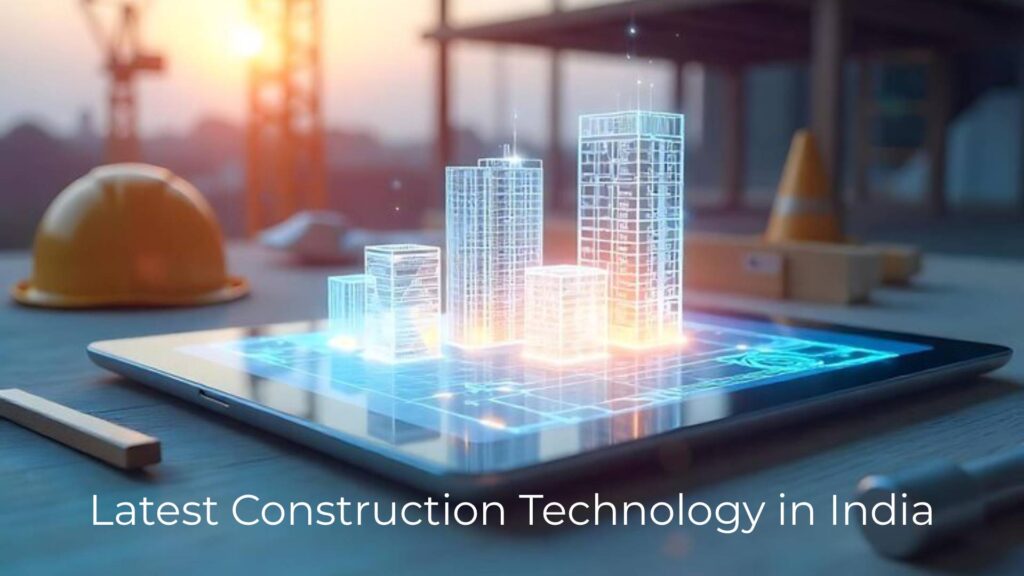
The way homes are built in India is changing, faster than most people realize. If you’re planning to build a home in Bangalore in 2026, you’re entering a construction landscape powered by digital intelligence, sustainable materials, and precision engineering that was barely imaginable a decade ago.
India’s construction industry is projected to reach $1.4 trillion by 2026 and grow at a CAGR of 8.8% through 2029. Driving this boom isn’t just demand, it’s technology. From AI-assisted project planning to drone-powered site surveys and smart IoT-integrated homes, the latest construction technology is making residential projects faster, safer, more cost-efficient, and significantly more sustainable.
In this guide, CosmicNest, a trusted residential construction company in Bangalore with 130+ completed projects, breaks down the 9 most important modern construction technologies shaping Indian homes in 2026, and explains what each one means for you as a homeowner.
Key Industry Figures at a Glance
• $1.4 Trillion, India Construction Market projected value by 2026
• 9%, Construction’s contribution to India’s GDP
• 8.8%, Industry CAGR from 2026 to 2029
• 130+, Residential projects completed by CosmicNest across Bangalore
Why Construction Technology Matters More Than Ever in India
India faces a unique set of construction challenges: a massive housing deficit, rapid urban migration into cities like Bangalore, rising material costs, skilled labor scarcity, and growing environmental awareness. Traditional construction methods, though still widely used, struggle to address all these pressures simultaneously.
Modern construction technology bridges this gap. It doesn’t replace the craftsmanship and expertise of experienced builders; it amplifies it. When a trusted construction company like CosmicNest combines time-tested construction knowledge with cutting-edge tools, the result is homes that are structurally superior, more energy-efficient, and delivered with greater transparency.
Here’s a look at the technologies that are actively reshaping how residential homes are designed, built, and maintained in India today.
1. Building Information Modeling (BIM), The Digital Blueprint Revolution
What is BIM?
Building Information Modeling is arguably the most transformative technology in modern construction. BIM goes far beyond traditional 2D architectural drawings, it creates an intelligent, data-rich 3D model of your entire home before a single brick is laid. This model integrates structural, architectural, MEP (mechanical, electrical, plumbing), and cost data into one collaborative digital environment.
The latest iteration, 5D BIM, adds both time (construction scheduling) and cost data to the 3D model, giving builders and homeowners unprecedented visibility into project timelines and budgets. The result: fewer design conflicts, reduced rework, better material planning, and more accurate cost estimation.
What This Means for Bangalore Homeowners
When your construction partner uses BIM, you can visualize your home in complete 3D detail before construction begins, including how natural light enters each room, where utilities run, and how design changes affect your budget in real time.
At CosmicNest, our team leverages design visualization tools to bring your home to life before construction starts. Learn about our residential construction process →
2. 3D Printing in Construction, From Concept to Concrete Reality
3D construction printing has arrived in India. In 2023, the Indian government approved the country’s first 3D-printed post office, a clear signal that this technology is moving from pilot projects into mainstream use. In residential construction, 3D printing is used to manufacture complex structural components, decorative facades, custom wall panels, and even entire structural shells, layer by layer, from digital models.
The benefits for the Indian context are significant. 3D printing reduces construction time by up to 50% for applicable components, drastically cuts material waste (since material is deposited only where needed), lowers labor dependency, and enables architectural designs that would be prohibitively expensive using conventional methods.
Bangalore relevance: As Bangalore grows and housing demand intensifies, expect 3D-printed construction components to become more common in new residential builds within the next 3–5 years.
3. Drone Technology and Aerial Site Intelligence
Drones have evolved from curiosity to critical infrastructure in construction site management. Modern construction drones equipped with AI and LiDAR (Light Detection and Ranging) sensors can generate precise 3D topographic maps, monitor construction progress in real time, conduct aerial safety inspections, and identify structural deviations compared to the approved plan.
For residential projects in Bangalore, drones provide construction managers with an accurate, up-to-date aerial view of the site, enabling faster decision-making, better progress tracking, and early detection of site-level issues. The integration of drone data with BIM platforms (“Scan to BIM”) allows for near-instantaneous synchronization of field conditions with the digital project model.
Safety benefit: Drones can inspect hard-to-reach areas, rooflines, elevated structures, scaffolding, without putting workers at risk, making construction sites measurably safer.
4. Artificial Intelligence and Machine Learning in Construction Management
AI is now embedded in the core workflows of modern construction management. Machine learning algorithms analyze historical project data to generate predictive construction schedules, forecast cost overruns before they happen, optimize resource allocation, and flag quality control issues in real time.
AI-powered construction software helps project managers handle the enormous complexity of coordinating materials, labor, subcontractors, regulatory approvals, and timelines simultaneously, something that was traditionally managed through spreadsheets and experience alone.
For homeowners, this translates into more reliable delivery timelines, more accurate initial cost estimates, and a generally smoother construction experience. See our construction estimation services →
5. Prefabricated and Modular Construction, Speed Without Compromise
Prefabricated construction, where structural components like wall panels, floor slabs, staircases, bathroom pods, and roof structures are manufactured in controlled factory environments and then transported to the site for assembly, is gaining serious momentum in India, particularly in Bangalore’s fast-growing residential market.
The quality advantage of prefabrication is significant. Factory manufacturing means components are produced under controlled conditions, with consistent material quality and dimensional accuracy that is difficult to achieve on a traditional construction site. Prefabrication also reduces construction time by 30–50%, minimizes on-site material waste, and reduces the overall environmental footprint of a project.
When combined with BIM planning, prefabricated construction becomes even more powerful, components are designed digitally, manufactured precisely, and assembled like a highly engineered puzzle.
6. Green Building Materials and Sustainable Construction
Sustainable construction is no longer a premium option reserved for large commercial projects, it’s becoming the standard for thoughtful residential construction in India. The Indian Green Building Council (IGBC) has been actively promoting sustainable building practices, and the market for green building materials in India is growing rapidly.
Key Green Building Materials for Indian Homes
• AAC (Autoclaved Aerated Concrete) blocks, lightweight, thermally insulating, and more sustainable than conventional red bricks.
• Fly ash bricks, made from industrial waste, significantly reducing both cost and carbon footprint.
• Recycled steel reinforcement, reduces the environmental impact of structural steel without compromising strength.
• Low-VOC paints and finishes, healthier indoor air quality for your family.
• Bamboo and engineered timber, rapidly renewable structural materials gaining acceptance in Indian residential design.
Our residential interior execution services incorporate sustainable finishes and energy-efficient design choices for a healthier, more eco-friendly home environment.
7. IoT and Smart Home Integration During Construction
The Internet of Things (IoT) is transforming what it means to own a home in India. Smart home technology, integrated at the construction stage, allows homeowners to control lighting, security, HVAC, energy consumption, and even water usage through smartphones and voice assistants like Amazon Alexa or Google Home.
More critically, IoT sensors embedded within a building’s structure during construction can monitor structural health in real time, detecting moisture ingress, stress concentrations, or settlement issues before they become expensive problems. For Bangalore homeowners, where soil conditions and monsoon seasons create specific structural challenges, this kind of embedded monitoring provides genuine peace of mind.
Pro tip: The most cost-effective approach is to plan for and install smart home conduit and wiring during the construction phase. Retrofitting a completed home for smart technology is significantly more expensive and disruptive. Discuss this with your construction partner at the planning stage.
8. Augmented Reality (AR) and Virtual Reality (VR) in Home Design
AR and VR are fundamentally changing how homeowners and builders collaborate on residential design. Instead of trying to mentally visualize a home from 2D floor plans, AR and VR allow you to take an immersive, first-person walkthrough of your home before construction begins, experiencing room proportions, natural light, material finishes, and furniture placement in a completely realistic virtual environment.
For construction teams, AR overlays digital plan information directly onto the physical site, allowing workers to see exactly where utilities, reinforcement, and structural elements should be placed with pinpoint accuracy, dramatically reducing measurement errors and rework.
Research indicates AR can boost productivity by up to 32% and reduce task completion time by up to 46% on construction sites. At CosmicNest, 3D visualization is a key part of our design and approvals process. Request a free consultation →
9. Advanced and Smart Building Materials
Self-Healing Concrete, Smart Glass, and Nanotechnology
Self-healing concrete uses embedded bacteria or chemical agents that activate when cracks form, filling the gaps autonomously and extending the structural life of a building significantly. For Indian homes, where concrete is the dominant structural material, this has enormous long-term implications for maintenance costs and structural integrity.
Smart glass (electrochromic glass) can shift from transparent to opaque on demand, or automatically tint in response to sunlight intensity, reducing cooling loads in Bangalore’s warm climate while maintaining natural daylight. This technology is particularly relevant for south-facing facades and glass-heavy modern home designs.
Nanotechnology-enhanced coatings applied to exterior surfaces provide superior waterproofing, UV resistance, and self-cleaning properties, directly relevant for homes in Bangalore that face both intense UV exposure and heavy monsoon rainfall. Paired with CosmicNest’s residential maintenance services, these advanced materials can significantly reduce long-term upkeep costs.
Building Your Dream Home in Bangalore?
CosmicNest combines 13+ years of expertise with modern construction methods and transparent project management. 130+ completed projects across Bangalore.
→ Get Your Free Consultation Today: https://cosmicnest.in/contact-us/
How These Technologies Are Changing Residential Construction in Bangalore
Bangalore is at the forefront of India’s construction technology adoption, driven by its tech-savvy population, strong professional community of architects and engineers, and the presence of innovative construction companies committed to quality. As a homeowner planning to build in Bangalore in 2026, here’s what you can realistically expect and demand from your construction partner:
Expect 3D visualization before construction begins. Any modern construction company should be able to show you a detailed 3D model of your home design, not just printed 2D plans. This allows you to make informed decisions about layout, finishes, and design modifications before costs are locked in.
Demand transparent, digital cost estimation. The era of vague lump-sum estimates is ending. Modern construction companies use digital tools for accurate, itemized cost breakdowns. Our construction estimation services provide exactly this kind of clarity for every project.
Ask about sustainable material options. Whether it’s AAC blocks, fly ash bricks, or low-VOC finishes, your construction partner should be able to recommend sustainable alternatives appropriate for your project and budget.
Plan for smart home integration at the construction stage. If automated lighting, security cameras, smart locks, EV charging points, or energy monitoring systems are on your wishlist, discuss this with your builder before construction starts. Pre-wiring during construction is a fraction of the cost of retrofitting later.
Read our in-depth guide on the Life Cycle of a Construction Project to understand how modern construction works from planning to completion.
India’s Construction Technology Landscape: The Bigger Picture
India is one of the three largest construction markets globally, alongside China and the United States. The government’s aggressive investment through the National Infrastructure Pipeline (NIP), the Smart Cities Mission, and the Pradhan Mantri Awas Yojana (PMAY) housing scheme is creating both demand and incentive for technology adoption across all scales of construction.
Construction 4.0, the convergence of IoT, AI, robotics, advanced materials, and digital twin technology, is emerging as a defining framework for the next generation of Indian construction companies. Firms that invest in these capabilities now are building a durable competitive advantage as homeowners become more discerning and sustainability regulations tighten.
The CosmicNest Approach: Traditional Values, Modern Methods
At CosmicNest, we believe the best homes are built at the intersection of proven craftsmanship and modern construction intelligence. Our team, part of the Chowdeshwaris Ratna Group with over a decade of experience since 2012, has completed 130+ residential projects across Bangalore by combining structural excellence with evolving technology adoption.
Our process begins with comprehensive site analysis and planning, moves through 3D-visualized design and BBMP regulatory approvals, and delivers construction using quality-verified materials with regular milestone-based progress updates. Every home we build is backed by a 1-year warranty on construction work and a 5-year structural warranty.
Explore our complete range of residential construction services, interior design and execution, and project maintenance services to understand how we can support your home building journey.
Frequently Asked Questions About Latest Construction Technology
Q1. What is the latest technology used in construction in India?
The latest construction technologies used in India include Building Information Modeling (BIM), 3D printing of structural components, drone-based aerial surveying and monitoring, AI-powered project management software, prefabricated and modular construction, green building materials (AAC blocks, fly ash bricks), IoT-based smart home integration, and Augmented/Virtual Reality for design visualization. These technologies are being adopted at various scales, from large infrastructure projects to individual residential builds in cities like Bangalore.
Q2. How does BIM technology benefit homebuilders in Bangalore?
BIM creates a detailed 3D digital model of your home before construction begins. It helps detect design conflicts early, reduces material wastage, improves collaboration between architects and contractors, and delivers more accurate cost estimates, saving both time and money for homeowners in Bangalore. The latest 5D BIM integrates time and cost data with the design, giving you complete visibility into your project’s schedule and budget before ground is broken.
Q3. Is 3D printing used in residential construction in India?
Yes. India has been experimenting with 3D printing in construction since the government approved the country’s first 3D-printed post office in 2023. While large-scale residential 3D printing is still emerging, it is increasingly used for structural components and decorative elements. It reduces construction time, material waste, and labor costs, and is expected to become more mainstream in Indian residential construction over the next 3–5 years.
Q4. What are green building materials and why are they important for Indian homes?
Green building materials include fly ash bricks, AAC (Autoclaved Aerated Concrete) blocks, recycled aggregates, bamboo, and low-VOC paints. They reduce a building’s carbon footprint, improve energy efficiency, and lower long-term utility costs. In cities like Bangalore, where environmental regulations and sustainability awareness are growing, these materials are becoming the preferred choice for quality residential construction.
Q5. How is AI used in construction project management?
AI in construction helps with predictive scheduling, automated cost estimation, material procurement optimization, risk assessment, and real-time site monitoring. AI-powered tools analyze large datasets to flag potential delays before they happen and suggest corrective actions, making construction timelines more reliable and budgets more predictable for homeowners.
Q6. What is prefabricated construction and is it suitable for homes in Bangalore?
Prefabricated construction involves manufacturing structural components like wall panels, slabs, and staircases in a factory and then assembling them on-site. It is well-suited to Bangalore’s residential market as it significantly reduces construction time, improves quality control, and minimizes on-site waste. For homeowners who want faster, high-quality construction with less on-site disruption, prefabrication is an excellent option to discuss with your builder.
Q7. How do drones help in residential construction projects?
Drones provide aerial site surveys, real-time progress monitoring, 3D topographic mapping (LiDAR scanning), and safety inspections. For residential projects in Bangalore, they help construction managers capture accurate site data, track progress remotely, and identify on-site hazards, reducing errors and improving decision-making throughout the project lifecycle, without added risk to workers.
Q8. When should I plan smart home technology integration for my new home?
The best time to plan and install smart home infrastructure, wiring for automated lighting, security systems, EV charging points, smart locks, and energy monitoring, is during the construction phase, before walls are closed. Retrofitting a completed home for smart technology is significantly more expensive and disruptive. Discuss your smart home requirements with your construction partner at the design and planning stage.
Further Reading and Internal Resources
Life Cycle of a Construction Project: Planning to Completion, CosmicNest Blog
Residential Construction Services in Bangalore, CosmicNest
Construction Estimation Services, CosmicNest
Residential Interior Design and Execution, CosmicNest
Residential Project Maintenance Services, CosmicNest
Our Completed Residential Projects in Bangalore, CosmicNest Portfolio
Indian Green Building Council (IGBC), Green Building Standards (External Reference)
Smart Cities Mission, Ministry of Housing and Urban Affairs, Government of India (External Reference)
About the CosmicNest
CosmicNest is a leading residential construction company in Bangalore, part of the Chowdeshwaris Ratna Group, with 13+ years of experience and 130+ completed residential projects. We specialize in residential construction, interior execution, and project maintenance across Bangalore.